Request a quote
Tell us a bit about your project, and we’ll get back to you with a custom quote


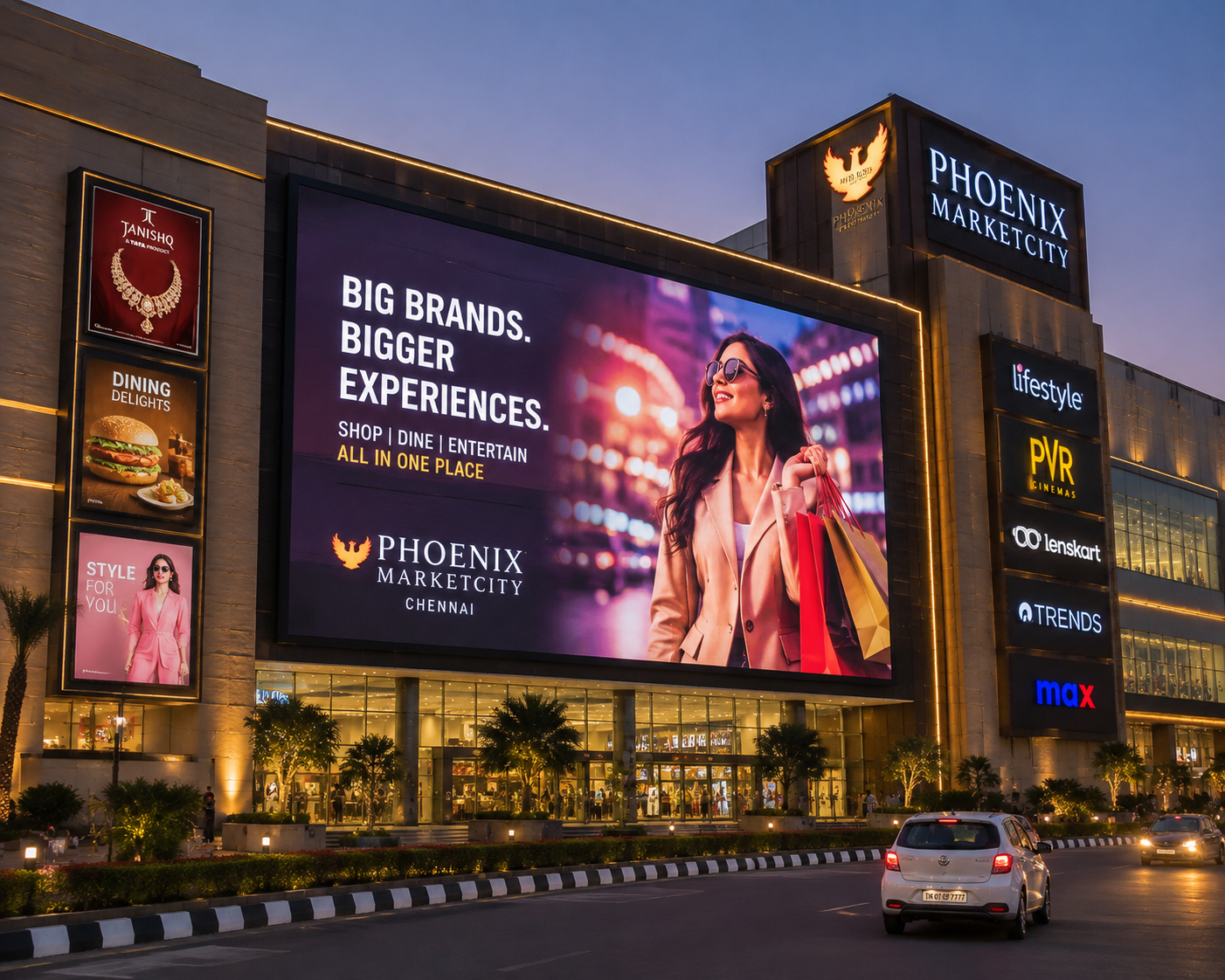
Outdoor advertising is becoming increasingly digital as businesses look for more engaging ways to capture attention in busy public spaces. An Outdoor LED Video Wall for Advertising allows brands to display bright visuals, promotional campaigns, product videos, animations, announcements, and branded content on a large digital screen that can attract attention from a distance.
Unlike traditional printed advertising, an outdoor LED display gives businesses the flexibility to change their content without replacing the physical display. Different campaigns can be scheduled throughout the day, making one screen useful for multiple promotions, products, events, and brand messages.
For businesses exploring outdoor digital signage for the first time, the Outdoor LED Video Wall Guide provides a broader understanding of LED display technology, applications, installation considerations, and important features to evaluate before investing.
An Outdoor LED Video Wall for Advertising is a large-format digital display created by combining multiple LED modules or cabinets into a single visual screen. The display can show static graphics, videos, animations, promotional offers, product campaigns, event content, and other digital messages.
Because LED technology produces its own light, outdoor displays can deliver strong visibility in bright environments. This makes them suitable for locations where conventional screens or printed advertising may struggle to attract attention.
The size and configuration of an outdoor LED video wall can be adapted according to the installation location and advertising requirements. A display positioned outside a retail store may have different requirements from a large screen installed beside a busy roadway, shopping complex, stadium, or event venue.
Modern customers are exposed to a huge amount of advertising every day. Static messages can easily blend into their surroundings, particularly in busy commercial areas. Dynamic LED advertising helps brands stand out by combining large visuals, brightness, movement, and regularly updated content.
An Outdoor LED Advertising Display can support different types of campaigns from the same screen. A retail brand can promote a new product in the morning, display a limited-time offer during the afternoon, and switch to a seasonal campaign later in the day.
This ability to change content provides advertisers with greater flexibility compared with traditional printed displays. Businesses can respond to promotions, events, product launches, seasonal campaigns, and changing marketing priorities without replacing the physical screen.
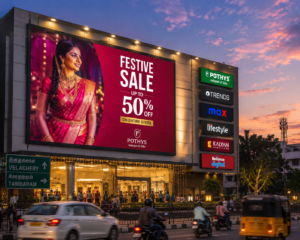
Outdoor LED video walls can be installed in a wide range of commercial and public environments where visibility and audience reach are important.
Retail stores, shopping centres, commercial streets, and brand outlets can use outdoor LED displays to promote products, seasonal offers, new arrivals, discounts, and brand campaigns. Large digital visuals can help attract potential customers before they enter the premises.
Outdoor LED advertising displays can be positioned in high-traffic areas where large numbers of people pass throughout the day. These locations can be useful for brand awareness campaigns, promotional messages, and location-based advertising.
Concerts, festivals, sporting events, exhibitions, and outdoor promotional events can use LED video walls for sponsor advertising, event branding, promotional videos, schedules, and live content. The same screen can support multiple communication requirements throughout an event.
Corporate campuses, business districts, hotels, and commercial properties can use outdoor LED displays to communicate brand messages, promotions, announcements, and important information to visitors and the surrounding audience.
The biggest advantage of digital LED advertising is content flexibility. A traditional billboard generally communicates one printed message until the creative is physically replaced. An LED video wall can display multiple campaigns and change them according to a predefined schedule.
This makes digital advertising particularly useful for businesses that run frequent promotions or need to communicate different messages to audiences throughout the day.
However, choosing an outdoor LED display should not be based only on screen size. Brightness, pixel pitch, viewing distance, weather protection, installation environment, content requirements, and maintenance should all be considered before selecting a solution.
Businesses looking for a dedicated commercial solution can explore Prism Play’s Outdoor Video Walls for outdoor digital signage applications.
A high-quality LED display is only one part of a successful outdoor advertising campaign. The content shown on the screen must also be designed for quick viewing and long-distance visibility.
Effective outdoor advertising content usually combines strong branding, simple messaging, high-quality visuals, readable typography, and a clear call to action. Since people may only have a few seconds to notice an advertisement, the main message should be easy to understand without requiring viewers to stop and read lengthy information.
Businesses should also consider the physical location and viewing distance when preparing their advertising creatives. Content that works well on a smartphone or indoor display may need to be redesigned for a large outdoor LED screen.
In the next part, we will explore the key benefits of using an Outdoor LED Video Wall for advertising and how dynamic digital displays can improve visibility, campaign flexibility, and audience engagement.
An Outdoor LED Video Wall for Advertising can give businesses a more flexible and visually engaging way to communicate with audiences in outdoor environments. Instead of relying on one fixed creative, brands can use dynamic digital content to promote different products, offers, campaigns, and messages from the same display.
The effectiveness of outdoor LED advertising depends on several factors, including display brightness, content quality, screen placement, viewing distance, and how frequently the advertising content is updated. When these elements work together, an LED display can become a powerful part of a modern outdoor marketing strategy.
One of the main reasons businesses choose outdoor LED displays is their ability to attract attention in busy environments. Outdoor locations often have strong daylight, moving traffic, buildings, signage, and other visual distractions. A properly configured LED display can provide bright and clear visuals that help advertising content stand out.
This makes outdoor LED advertising suitable for high-traffic commercial areas, shopping destinations, event venues, business districts, and roadside locations where brands want to increase visibility.
However, brightness should always be selected according to the installation environment. A display exposed to direct sunlight may require different specifications from one installed in a partially shaded outdoor location.
Traditional advertising usually requires a physical creative to be printed and installed. Digital LED advertising provides a different approach by allowing businesses to display multiple pieces of content on one screen.
A single Outdoor LED Video Wall can support product advertisements, promotional campaigns, brand videos, event announcements, seasonal messages, and other marketing content. This allows businesses to make better use of the available screen space.
For example, a retail brand can schedule different advertisements throughout the day based on customer activity. A restaurant can promote breakfast, lunch, and dinner offers at different times, while an event organizer can combine sponsor advertisements with event information and promotional videos.
Advertising campaigns can change quickly. New products launch, seasonal offers begin, events are announced, and promotional messages may need to be updated within a short period.
An outdoor LED advertising display provides the flexibility to update digital content without replacing the physical display. Depending on the content management setup, businesses can schedule campaigns, change creatives, and manage advertising content more efficiently.
This flexibility can be particularly valuable for businesses running multiple campaigns throughout the year. Instead of investing in a new physical advertising surface for every campaign, the same LED display can support different messages over time.
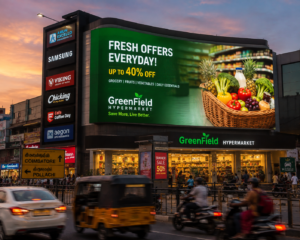
The location of an advertising display has a major influence on its potential reach. Outdoor LED video walls can be positioned in areas where audiences naturally spend time or pass regularly.
Busy roads, commercial centers, shopping districts, event venues, transportation areas, and building exteriors can provide valuable opportunities for outdoor digital advertising. When the screen is positioned correctly, the display can communicate with a large number of people throughout the day.
Businesses should evaluate traffic patterns, audience demographics, viewing distance, viewing angles, surrounding structures, and available installation space before selecting a location.
Outdoor advertising often has only a few seconds to capture someone’s attention. This makes visual communication extremely important.
LED video walls can support high-quality images, video, animation, branding elements, and motion graphics. These capabilities allow businesses to create advertising campaigns that are more visually dynamic than a single static image.
For the best results, outdoor advertising creatives should keep the main message simple. Strong visuals, recognizable branding, short headlines, and clear calls to action can make advertisements easier to understand from a distance.
Outdoor LED advertising is not limited to direct product promotions. Businesses can use digital displays for several marketing objectives, including brand awareness, product launches, seasonal promotions, event promotion, public communication, and customer engagement.
A brand launching a new product could use an LED video wall to build awareness before the launch. A shopping centre could promote weekend offers, while an event organizer could use the same technology to display sponsors and event announcements.
This versatility allows one display to support different stages of a marketing campaign instead of being restricted to a single advertising purpose.
Outdoor LED advertising can also complement other digital marketing channels. Businesses can coordinate their outdoor campaigns with social media, websites, online advertising, and in-store promotions to create a more consistent brand experience.
For example, an outdoor campaign can introduce a product while a QR code or short call to action encourages customers to continue their journey online. This creates a connection between physical advertising and digital customer engagement.
When planning an outdoor LED campaign, businesses should therefore consider the display as part of their wider marketing strategy rather than treating it as an isolated advertising channel.
While outdoor LED video walls provide significant advertising flexibility, the display must be suitable for the environment and intended application. Pixel pitch, brightness, weather protection, screen size, viewing distance, installation structure, and maintenance requirements can all influence the final result.
Businesses evaluating their options can explore Outdoor Video Walls from Prism Play to understand the type of commercial LED display solution that can support outdoor advertising requirements.
For a broader understanding of the technology and important selection considerations, the Outdoor LED Video Wall Guide can also help businesses evaluate different aspects of outdoor LED display solutions.
In the next part, we’ll look at the best outdoor advertising locations for LED video walls and how businesses can select locations based on audience movement, visibility, traffic, and advertising objectives.
The location of an Outdoor LED Video Wall for Advertising plays an important role in determining how effectively a campaign reaches its target audience. Even a high-quality LED display may not deliver the expected results if it is installed in a location with poor visibility, limited viewing distance, or low audience traffic.
For this reason, businesses should evaluate the surroundings, audience movement, traffic patterns, viewing angles, and advertising objectives before selecting an installation location. The right combination of location and display technology can help brands create stronger visibility and make better use of their outdoor advertising investment.
Retail environments are among the most suitable locations for an Outdoor LED Advertising Display. Stores can use large digital screens to attract attention before customers enter the premises and promote new products, discounts, seasonal campaigns, launches, and special offers.
Shopping centres can also use LED video walls to promote multiple brands and campaigns from a centralized digital display. Because content can be changed regularly, the same screen can support different advertisers and promotional messages throughout the day.
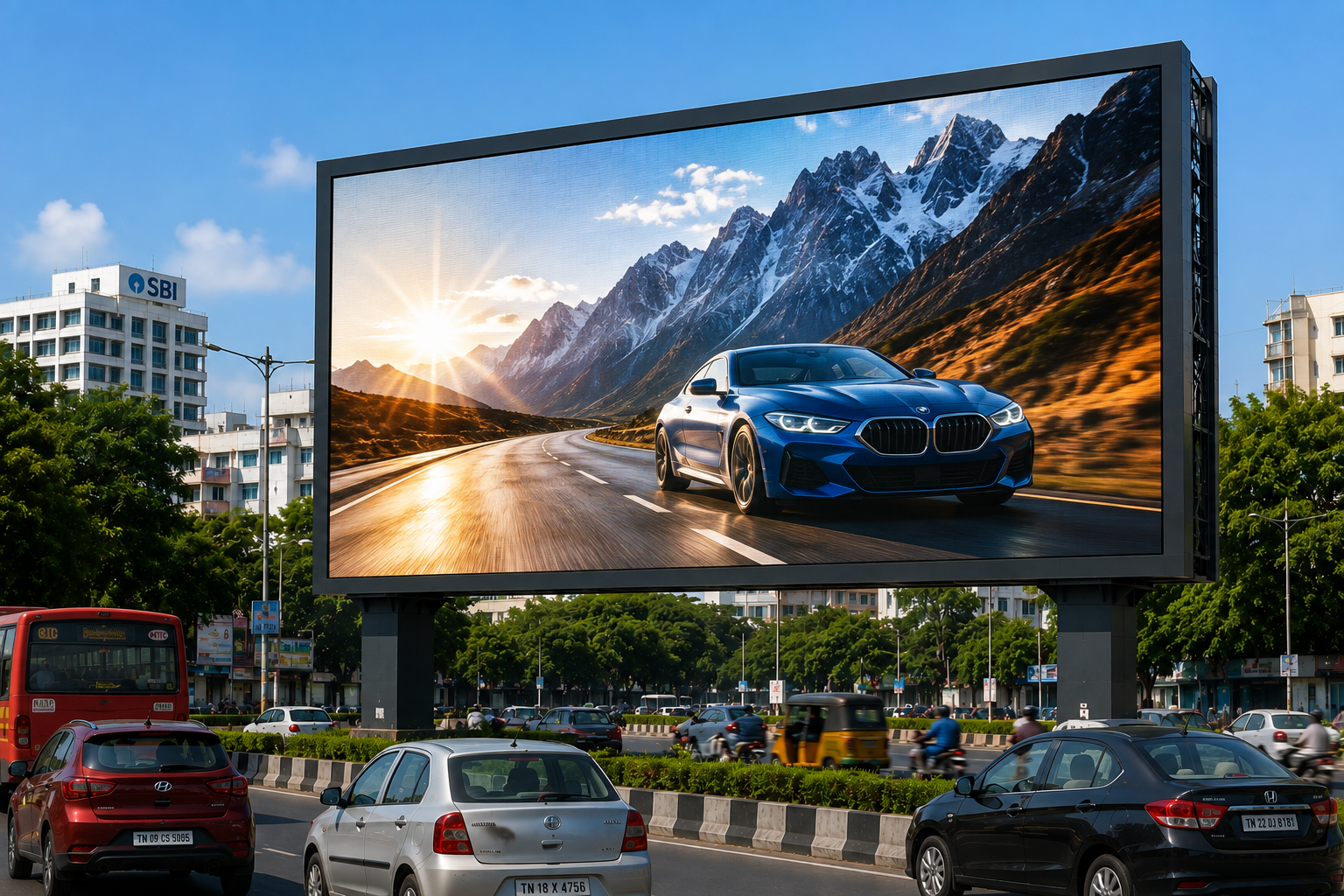
Roadside advertising locations can provide strong exposure when an LED display is positioned where drivers and passengers have sufficient viewing time. Large-format digital displays can communicate brand messages, product promotions, and short advertising campaigns to audiences travelling through busy areas.
For roadside installations, visibility and readability are particularly important. Businesses should consider the distance between the audience and the screen, the speed of passing traffic, surrounding structures, viewing angles, and ambient lighting when planning an LED Video Wall for Outdoor Advertising.
Advertising content should also be simple enough to understand quickly. A short headline, recognizable brand identity, strong visual, and clear call to action can be more effective than a creative containing too much information.
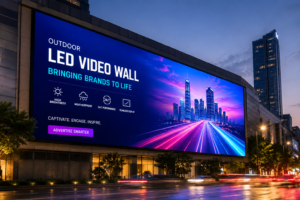
Hotels, restaurants, resorts, and entertainment properties can use outdoor LED displays to communicate directly with visitors and people passing nearby. Promotional offers, dining experiences, upcoming events, seasonal packages, and brand campaigns can all be displayed digitally.
A restaurant located in a busy commercial area, for example, can use an outdoor LED advertising display to promote lunch offers during the afternoon and switch to dinner promotions later in the day. This type of scheduled content allows businesses to make their advertising more relevant to the audience and time of day.
Outdoor LED video walls are also highly useful at concerts, festivals, exhibitions, sporting events, weddings, product launches, and other large gatherings. These environments provide opportunities for both event communication and advertising.
Event organizers can use an LED display to showcase sponsors, promotional videos, event schedules, announcements, branding, and live content. Multiple advertisers can also share the same display through scheduled content, creating additional opportunities for sponsor visibility.
Corporate offices, business parks, commercial buildings, and mixed-use developments can use outdoor LED video walls to strengthen brand visibility and communicate information to visitors and surrounding audiences.
Businesses can display corporate campaigns, recruitment messages, product announcements, company achievements, event promotions, and other branded communications. A strategically positioned screen can become a highly visible communication point within a commercial environment.
Transportation hubs and other high-footfall public locations can provide valuable opportunities for outdoor digital advertising. Airports, railway areas, bus terminals, and major pedestrian zones may have large audiences moving through the location throughout the day.
In these environments, an Outdoor LED Video Wall for Advertising can be used for commercial campaigns as well as announcements, directional information, event promotions, and public communication.
Because these locations often have different audience groups throughout the day, digital content scheduling can help advertisers deliver more relevant messages at different times.
Choosing a location should involve more than simply identifying a busy area. Businesses should understand who will see the display, how long they are likely to view it, and whether the screen will remain clearly visible throughout the day.
Important factors include audience demographics, pedestrian and vehicle traffic, viewing distance, viewing angle, daylight exposure, surrounding buildings, competing signage, available installation space, and local advertising regulations.
The content strategy should also influence the location. A detailed product campaign may require a location where viewers have more time to engage, while a simple brand-awareness message may work effectively in a high-speed traffic environment.
Once the advertising location has been selected, the LED display specifications should be matched to that environment. Brightness, pixel pitch, screen size, weather protection, viewing distance, and installation requirements can all influence the final viewing experience.
For example, a large roadside display may require different specifications from an LED screen positioned outside a retail store. Understanding these differences helps businesses avoid choosing a display based only on size or price.
Businesses can explore Prism Play’s Outdoor Video Walls when evaluating commercial outdoor LED solutions for advertising, events, retail, and other high-visibility applications.
For a broader explanation of outdoor LED technology, installation considerations, and applications, visit the Outdoor LED Video Wall Guide.
In the next part, we’ll examine the key features to look for in an Outdoor LED Advertising Display, including brightness, pixel pitch, weather protection, screen size, viewing distance, and content management.
Choosing the right Outdoor LED Advertising Display requires more than comparing screen sizes or prices. Outdoor environments can expose LED displays to strong sunlight, rain, dust, humidity, heat, and changing viewing conditions. The display should therefore be selected according to the location, audience, content type, and expected operating conditions.
For businesses planning an Outdoor LED Video Wall for Advertising, understanding the most important technical and practical features can make the purchasing decision easier and help ensure reliable long-term performance.
Brightness is one of the most important factors for an outdoor LED display. Unlike indoor environments, outdoor screens may be exposed to direct sunlight and changing ambient light throughout the day.
A suitable outdoor display should provide sufficient brightness for advertising content to remain clearly visible during daylight hours. This is particularly important for roadside displays, shopping areas, commercial buildings, and other locations with strong natural light.
Businesses should evaluate the amount of direct sunlight reaching the installation location before selecting the display. Choosing the right brightness level helps maintain clear visuals without compromising the viewing experience during different times of the day.
Pixel pitch refers to the distance between individual LED pixels. It influences the level of detail and clarity that viewers can see on the screen.
The appropriate pixel pitch depends largely on viewing distance. An LED video wall positioned close to pedestrians may require a finer pixel pitch, while a large roadside display viewed from a greater distance can use a different configuration.
Instead of automatically choosing the smallest pixel pitch available, businesses should first determine the typical viewing distance and content requirements. This approach helps balance image quality, performance, and investment.
An outdoor LED advertising display must be designed to operate reliably in changing weather conditions. Rain, dust, humidity, heat, and temperature fluctuations can affect electronic equipment if the display is not adequately protected.
Weather-resistant construction helps protect the LED modules and internal components from the outdoor environment. Businesses should review the display’s protection specifications and ensure that they are appropriate for the installation location.
Durability is particularly important for permanent outdoor advertising installations where the display may operate for extended periods throughout the year.
The ideal screen size depends on the available installation space, viewing distance, audience movement, and type of advertising content. A larger screen can create greater visual impact, but size alone should not determine the purchasing decision.
The screen should be large enough for the intended audience to see the advertising message comfortably while remaining suitable for the physical installation environment.
Aspect ratio should also be considered when planning advertising creatives. The content should match the display format so that videos, graphics, logos, and promotional messages appear correctly without unnecessary cropping or distortion.

Not every viewer will look at the display directly from the front. In retail streets, public spaces, event venues, and roadside locations, audiences may approach the screen from different directions.
A suitable viewing angle helps ensure that advertising content remains clear for people observing the display from different positions. Businesses should therefore consider audience movement and the physical layout surrounding the LED video wall before installation.
Digital advertising becomes significantly more useful when businesses can manage and schedule content efficiently. A reliable content management system can allow marketing teams to update campaigns, schedule different advertisements, and manage digital content according to business requirements.
For example, an advertiser can schedule one promotion during business hours and another campaign during the evening. Event organizers can also change content according to event schedules, sponsors, announcements, and live activities.
This flexibility is one of the key advantages of using an LED Video Wall for Outdoor Advertising instead of relying entirely on static advertising formats.
Because outdoor LED displays can operate for long periods, businesses should also consider power consumption and operating requirements. Efficient display technology can help organizations manage ongoing operating costs while maintaining the required brightness and visual performance.
Power availability, electrical infrastructure, ventilation, and installation conditions should be evaluated before the display is installed. Proper planning can help avoid operational issues after deployment.
Long-term maintenance should be considered before purchasing an Outdoor LED Video Wall for Advertising. Outdoor displays are exposed to environmental conditions, so regular inspection and servicing can help maintain consistent performance.
Businesses should consider access to replacement components, technical support, preventive maintenance, and servicing requirements. Choosing a reliable commercial LED solution can make ongoing maintenance easier and help reduce unexpected downtime.
The best Outdoor LED Advertising Display is not necessarily the one with the highest specification in every category. Instead, the right solution should match the actual requirements of the advertising location and campaign.
A roadside advertising installation may prioritize high brightness and long viewing distance, while a retail environment may place greater emphasis on image detail, screen size, and viewing angle. Event applications may require additional flexibility for videos, live content, sponsor branding, and changing event information.
Businesses can explore Prism Play’s Outdoor Video Walls when evaluating commercial LED display solutions for outdoor advertising and large-format digital communication.
For a broader understanding of outdoor LED display technology and the factors involved in selecting a suitable solution, the Outdoor LED Video Wall Guide provides additional information.
In the next part, we’ll compare Outdoor LED Video Walls with traditional billboards and examine the differences in content flexibility, campaign management, visibility, and long-term advertising value.
Traditional billboards have been used for outdoor advertising for decades, but the growth of digital signage has given businesses another option for reaching audiences in high-traffic locations. An Outdoor LED Video Wall for Advertising provides dynamic content, flexible campaign management, and the ability to communicate multiple messages from the same physical display.
Both traditional billboards and LED displays can be effective depending on the location, audience, campaign objective, and budget. The important difference is how the advertising content is created, managed, updated, and delivered to viewers.
A traditional billboard generally displays one fixed creative. When a campaign changes, the existing advertising material needs to be physically replaced with a new printed creative.
An Outdoor LED Advertising Display works differently. Businesses can use digital content such as videos, animations, product visuals, promotional graphics, and branded messages. Multiple creatives can be scheduled on the same screen, allowing advertisers to use one display for different campaigns.
This flexibility is particularly useful for businesses that frequently update promotions, launch new products, or run seasonal advertising campaigns.
One of the major advantages of an LED Video Wall for Outdoor Advertising is the ability to change digital content without physically replacing the display surface.
For example, a retail business can update its advertising campaign when a promotion ends and immediately introduce a new offer. An event organizer can change sponsor content, schedules, announcements, and promotional messages throughout an event.
This makes digital LED advertising suitable for businesses that need their outdoor communication to remain flexible and relevant.
A traditional billboard generally has limited space for one creative at a time. An outdoor LED video wall can support several advertising messages during a scheduled content cycle.
This means a single display can potentially support multiple products, brands, promotions, or campaigns. For commercial locations, this flexibility can create additional advertising opportunities without requiring a separate physical billboard for every message.
For example, a shopping centre could use one outdoor LED display to promote several stores throughout the day, while an event venue could combine sponsor advertising with event branding and announcements.
Traditional billboards depend primarily on static visual design to attract attention. LED video walls can add movement through videos, animations, transitions, and other digital visual elements.
This can help brands communicate products and services in a more visually engaging format. Product demonstrations, promotional videos, brand stories, event highlights, and animated campaigns can all be adapted for large-format LED displays.
However, motion should be used strategically. Outdoor advertising content still needs to communicate the main message quickly, particularly in locations where viewers are moving past the screen.
Marketing campaigns are rarely static. Businesses may change their offers according to seasons, customer demand, events, product launches, or business priorities.
An Outdoor LED Video Wall allows advertising content to adapt to these changes. Instead of treating the physical advertising structure as a fixed campaign, businesses can use the display as a flexible digital communication platform.
This adaptability can be especially useful for retail brands, restaurants, entertainment venues, automobile dealerships, shopping centres, event organizers, and corporate businesses.
Traditional billboards do not require electronic brightness management, while LED displays need to be selected according to the surrounding lighting conditions. Outdoor LED advertising therefore requires careful consideration of brightness, viewing distance, pixel pitch, and installation position.
A properly selected Outdoor LED Advertising Display can provide strong visibility in daylight and changing outdoor conditions. The display specifications should always be matched to the location rather than selected only according to screen size.
When comparing an LED video wall with traditional billboard advertising, businesses should consider the long-term flexibility of the communication platform. A static billboard may be suitable when a campaign is expected to remain unchanged for an extended period.
An LED video wall can be more suitable when the business expects to run multiple campaigns, update content regularly, use video, or adapt messaging throughout the day.
The best option ultimately depends on the advertising objective, location, audience, campaign frequency, and available investment. Businesses should evaluate the complete operating requirements rather than comparing only the initial purchase price.
Traditional billboards can remain useful for simple, long-running campaigns where one fixed message is sufficient. Outdoor LED video walls are particularly valuable when businesses need dynamic content, multiple campaigns, frequent updates, and stronger digital engagement.
For businesses considering a modern digital advertising solution, Prism Play’s Outdoor Video Walls can support a range of commercial outdoor applications, including advertising, events, retail, and brand communication.
If you want to understand the technology, installation requirements, applications, and important specifications in greater detail, visit the Outdoor LED Video Wall Guide.
In the final part, we’ll explain how to choose the right Outdoor LED Video Wall for your advertising campaign, bringing together location, viewing distance, brightness, pixel pitch, content, maintenance, and business objectives.
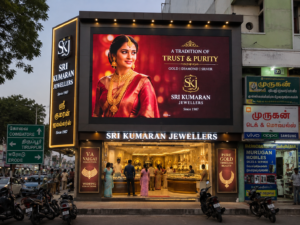
Choosing the right Outdoor LED Video Wall for Advertising starts with understanding your campaign objectives, installation environment, target audience, and expected content requirements. Rather than selecting a display based only on screen size or price, businesses should evaluate the complete solution and determine which specifications will provide the best performance for their specific location.
Before selecting an LED display, define what you want the screen to achieve. A brand-awareness campaign may require a large, highly visible display, while a retail promotion may focus more on product visuals, offers, and frequent content updates.
Businesses should consider whether the display will primarily be used for advertising, product promotion, event communication, brand awareness, sponsor campaigns, or a combination of different purposes. Having a clear objective makes it easier to determine the appropriate screen size, content format, and technical specifications.
The installation location has a direct influence on the type of Outdoor LED Advertising Display required. A screen installed beside a busy road may need different specifications from one positioned outside a shopping centre or event venue.
Consider the available installation space, surrounding structures, audience movement, traffic patterns, viewing angles, daylight exposure, and expected viewing distance. These factors help determine how large the screen should be and which display specifications are most suitable.
Pixel pitch should be selected according to the typical viewing distance. If viewers will be relatively close to the display, a finer pixel pitch can provide greater image detail. For large outdoor installations viewed from a greater distance, a different pixel pitch may provide an effective balance between visual performance and investment.
The goal is not simply to select the smallest pixel pitch available. Instead, businesses should match the pixel pitch to the actual viewing environment and the type of advertising content being displayed.
Outdoor advertising displays need to remain clearly visible under changing lighting conditions. Direct sunlight can significantly affect how advertising content appears on a screen, making brightness an important consideration.
Businesses should evaluate how much direct sunlight the display will receive during different times of the day. A properly selected outdoor LED display should provide strong visibility while being suitable for the surrounding environment.
Outdoor LED video walls are exposed to environmental conditions that indoor displays do not normally experience. Rain, dust, humidity, heat, and temperature changes can affect electronic equipment if it is not adequately protected.
For permanent outdoor advertising installations, businesses should prioritize commercial displays designed for outdoor operation and review the available weather protection specifications. Durable construction can help support reliable performance and reduce unnecessary maintenance issues.
The type of content you plan to display should also influence your LED video wall selection. Businesses using product videos, animations, promotional graphics, live content, or multiple advertising campaigns should ensure that the display and content management system can support their requirements.
Outdoor advertising content should generally be simple, visually strong, and easy to understand from the expected viewing distance. Short messages, strong branding, high-quality visuals, and clear calls to action can help audiences understand the campaign quickly.
A flexible content management system can make an Outdoor LED Video Wall more useful for long-term advertising. Businesses may need to update campaigns, schedule different advertisements, change promotional messages, or coordinate content with specific times and events.
Digital content management allows businesses to use the same physical display for multiple campaigns instead of treating the screen as a single fixed advertisement. This flexibility can be especially useful for retailers, event venues, commercial properties, and businesses with frequently changing promotions.
Maintenance should be considered before purchasing an LED display rather than after installation. Regular inspections, cleaning, technical servicing, and replacement of components when required can help maintain consistent display performance.
Businesses should also consider service support, component availability, installation quality, and accessibility for maintenance. A reliable commercial solution combined with proper maintenance planning can help reduce unexpected downtime and support long-term operation.
The lowest initial price does not always represent the best value for an outdoor advertising project. Businesses should evaluate the complete investment, including display quality, installation, content management, maintenance, energy requirements, service support, and expected operating life.
A well-selected Outdoor LED Video Wall can become a long-term digital advertising asset that supports multiple campaigns and business objectives. Evaluating the total value rather than focusing only on upfront cost can lead to a more sustainable investment decision.
Prism Play provides commercial LED display solutions for businesses and organizations looking to create high-impact digital communication experiences. Our Outdoor Video Walls are designed for applications where visibility, durability, and reliable outdoor performance are important.
Whether the requirement is for advertising, retail promotion, corporate communication, events, entertainment, or large-scale brand visibility, the right LED solution can be selected according to the installation environment and business objectives.
Businesses can also visit the Prism Play website to explore digital display solutions and understand how LED technology can support different commercial applications.
Selecting an LED Video Wall for Outdoor Advertising should be based on more than appearance or screen size. Location, viewing distance, brightness, pixel pitch, weather protection, content requirements, maintenance, and long-term business objectives all contribute to the success of an outdoor digital advertising installation.
When these factors are evaluated together, businesses can choose a display that provides strong visibility, flexible content management, and reliable performance for their advertising campaigns.
If you’re ready to explore an outdoor LED solution for your business, take a look at Prism Play’s Outdoor Video Walls and evaluate the solution that best matches your advertising requirements.
For additional information about outdoor LED technology, applications, and selection considerations, refer to the complete Outdoor LED Video Wall Guide.