Request a quote
Tell us a bit about your project, and we’ll get back to you with a custom quote


Choosing the best LED video wall depends on more than screen size or visual quality. The right display should match your environment, viewing distance, content requirements, brightness conditions, installation space, and expected usage. Whether you need an LED video wall for a corporate office, retail store, showroom, event venue, educational institution, or outdoor advertising space, understanding these factors can help you select a display that delivers clear and engaging visuals.
The installation environment is one of the first factors to consider when selecting an LED video wall.
For indoor locations such as offices, retail stores, malls, showrooms, conference rooms, and event spaces, an indoor LED video wall can provide sharp and engaging visuals in controlled lighting conditions.
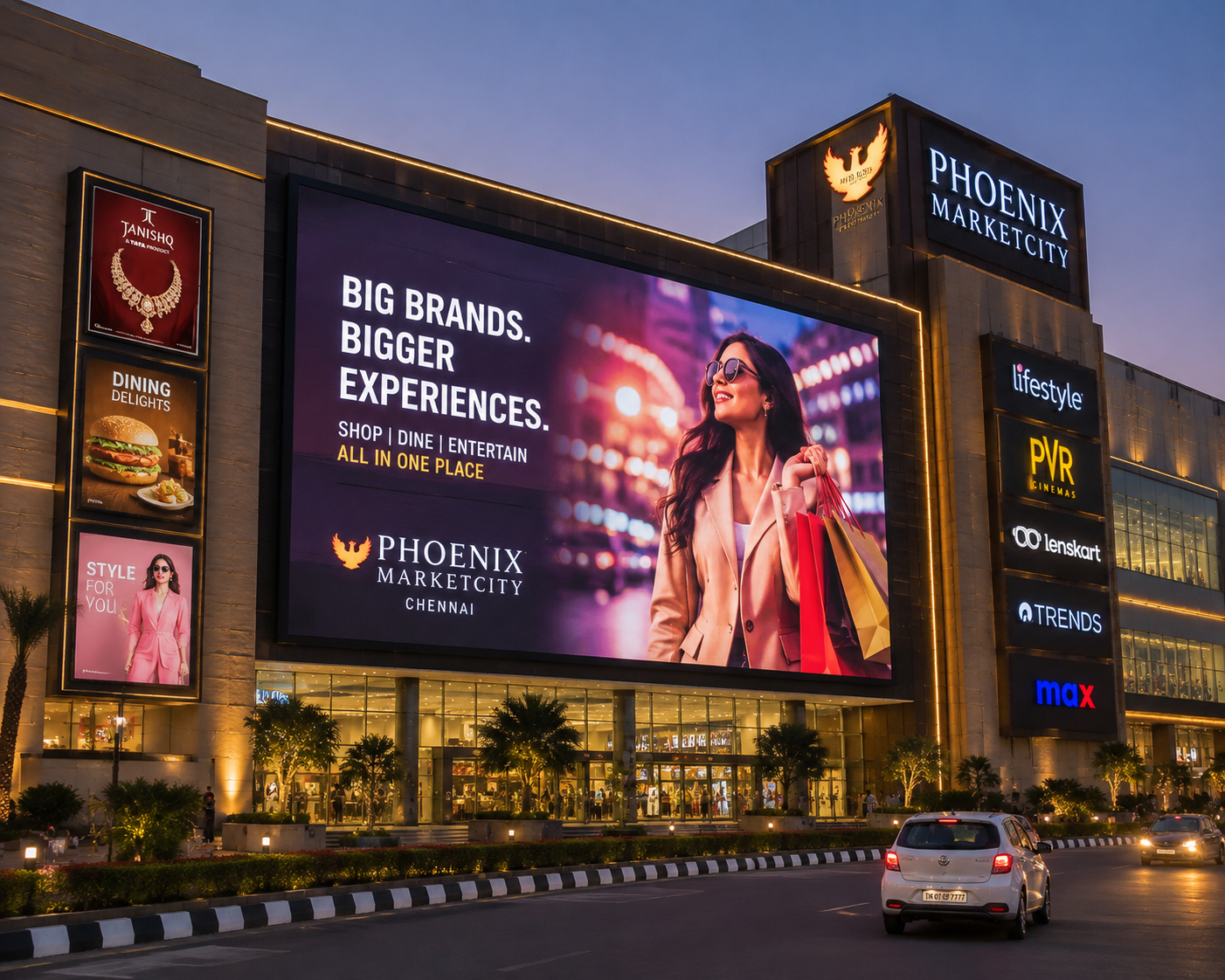
Outdoor installations require displays designed to handle changing weather and stronger ambient light. Outdoor LED video walls are designed for applications where high visibility and reliable performance are important.
Before selecting a display, determine whether the installation will be indoors or outdoors and understand the surrounding lighting conditions.
Screen size should be based on the available installation area and how the display will be viewed.
A larger LED video wall can be useful when the audience is positioned farther away or when the display needs to attract attention across a large space. Smaller displays may be more suitable for reception areas, retail spaces, meeting rooms, and other locations with limited installation space.
Instead of choosing the largest available screen, consider the viewing distance, available wall or mounting area, and the type of content that will be displayed.
Pixel pitch refers to the distance between individual LED pixels. It plays an important role in determining how clearly content appears on the screen.
A smaller pixel pitch generally provides greater pixel density and can be beneficial when viewers are positioned close to the display. Larger pixel pitches can be suitable for applications where the audience is farther away.
For example, an LED video wall viewed from a short distance in an indoor environment may require a different pixel pitch from a large outdoor display viewed from across a road or open area.
Consider the typical viewing distance before selecting the pixel pitch.
Viewing distance and pixel pitch should be considered together.
If people will stand close to the screen, a finer pixel pitch can help provide clearer images and text. For displays viewed from a greater distance, a larger pixel pitch may be appropriate.
Think about where the audience will normally be located rather than simply choosing a specification based on the smallest pixel pitch available.
This approach can help balance image quality, screen requirements, and overall project needs.
Brightness requirements vary depending on the environment.
Indoor LED video walls generally operate in controlled lighting conditions, while outdoor displays need to remain visible under changing daylight conditions.
For outdoor applications, high brightness can help content remain visible in bright surroundings. For indoor applications, the brightness level should be suitable for the room so that content remains comfortable to view.
The surrounding lighting conditions should therefore be considered before choosing an LED video wall.
The type of content can also influence your LED video wall selection.
Different applications may display:
If the display will frequently show detailed graphics, text, or high-quality video, selecting an appropriate pixel pitch and display configuration becomes especially important.
It is useful to identify your main content requirements before finalizing the display.
Understanding the difference between indoor and outdoor LED video walls is essential.
Indoor LED video walls are designed for environments such as offices, retail stores, showrooms, malls, conference spaces, and events. They are typically used where ambient lighting is more controlled.
Outdoor LED video walls are designed for applications such as outdoor advertising, commercial spaces, events, and other outdoor environments. They need to provide strong visibility under daylight and changing weather conditions.
The choice should be based on the actual installation environment rather than simply the intended screen size.
Before purchasing an LED video wall, consider how the display will be installed and maintained.
The available mounting area, access for servicing, power requirements, ventilation, and surrounding space should be reviewed during the planning stage.
For larger installations, proper planning can also help ensure that the display fits the available space and can be accessed when maintenance is required.
Discussing installation requirements with an experienced LED display provider can help identify practical requirements before the project begins.
There is no single LED video wall specification that works for every environment.
A corporate meeting room may require a different configuration from a retail showroom. Similarly, an outdoor advertising application may require different brightness and protection requirements compared with an indoor event display.
When comparing options, consider:
Looking at these factors together can make it easier to identify the right display for your application.
Your LED video wall should fit into the broader visual communication requirements of your business.
Depending on the application, you may also require other display formats for promotional content, announcements, retail communication, or digital signage. You can explore LED display solutions from Prism Play to understand the different applications and display options available.
The goal is to select a display that fits your space, audience, content, and long-term requirements.
Selecting the right LED video wall can involve several technical and installation considerations. An experienced display provider can help evaluate your environment and recommend suitable options based on your requirements.
Prism Play provides indoor and outdoor LED video wall solutions for businesses and organizations across India. The right configuration can be selected based on the installation environment, viewing distance, display requirements, and intended application.
For businesses looking for additional display formats, Prism Play also provides LED Poster Display solutions for suitable indoor applications.
If you are planning an LED display installation and need help understanding the suitable configuration, you can contact Prism Play to discuss your requirements.
Consider the installation environment, screen size, pixel pitch, viewing distance, brightness, content requirements, installation space, and maintenance requirements.
Not necessarily. A smaller pixel pitch can be useful for close viewing distances, while larger pixel pitches may be suitable when viewers are farther from the screen. The right choice depends on the application.
Choose based on where the display will be installed. Indoor LED video walls are designed for controlled indoor environments, while outdoor LED video walls are designed for stronger ambient light and outdoor conditions.
Viewing distance is important because it affects how the pixel pitch and screen resolution should be selected. The display should be planned according to where the audience will normally view it.
Yes. LED video walls can be used to display videos, advertisements, graphics, presentations, announcements, images, and other digital content depending on the application.
Start by identifying the installation environment, viewing distance, available space, content requirements, brightness conditions, and intended use. These factors can help determine the appropriate LED video wall configuration.