Request a quote
Tell us a bit about your project, and we’ll get back to you with a custom quote


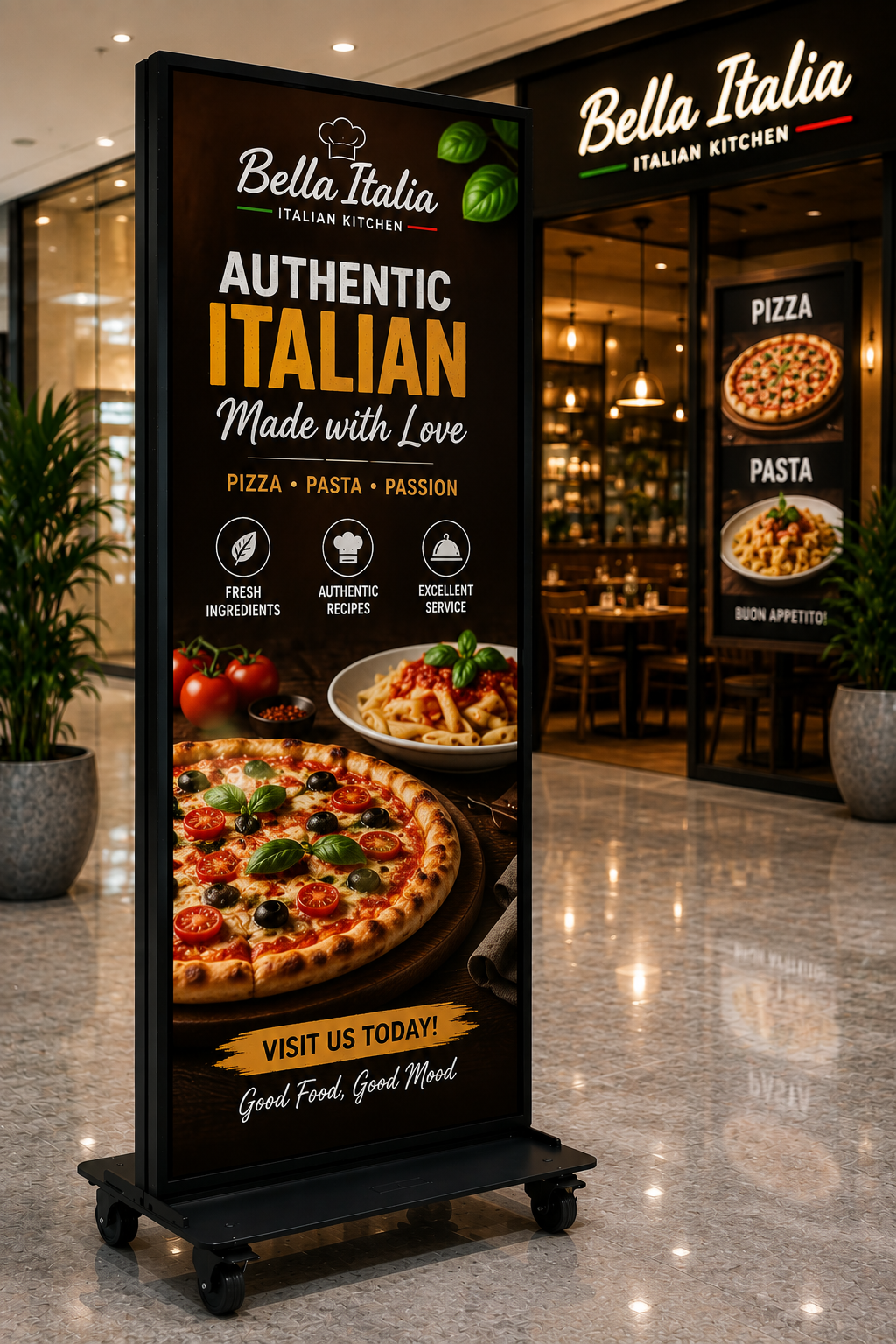
Retail stores are constantly looking for better ways to attract attention, promote products, and communicate offers inside their stores. Traditional posters and printed promotional materials can be useful, but they remain fixed once they are printed. An Indoor LED Poster Display for Retail Stores gives retailers a more flexible way to present promotional content, product visuals, brand campaigns, and seasonal offers through a bright digital screen.
Instead of replacing a printed poster whenever a promotion changes, retailers can update the content displayed on an LED poster screen. This makes digital displays useful for stores that frequently change their promotions, introduce new products, or run different campaigns throughout the year.
For businesses that want to understand the technology, applications, specifications, and selection factors in greater detail, the indoor LED poster display guide provides a broader overview.
An indoor LED poster display is a compact digital display designed to present visual content in indoor commercial environments. Unlike a conventional printed poster, the screen can display videos, images, animations, promotional graphics, product information, and other digital content.
For retail stores, this creates an opportunity to turn promotional areas into dynamic digital communication points. A display placed near an entrance, product section, checkout area, showroom, or promotional zone can attract customer attention and communicate important information while shoppers move through the store.
The vertical poster-style format can also make the display suitable for retail environments where floor space is limited. Rather than requiring a large video wall installation, businesses can use a standalone digital poster format for targeted promotional communication.
Retail advertising often depends on catching attention quickly. Customers may walk past a promotional display without stopping, especially when the surrounding environment contains many signs, posters, products, and advertisements.
An LED Poster Display for Retail can make promotional content more visually noticeable by combining a bright digital screen with motion and changing content.
Retailers can use the same display to promote:
The content can also be changed according to the store’s marketing calendar, allowing the display to remain useful beyond a single campaign.
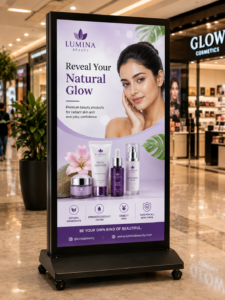
The placement of a digital display can influence how effectively customers notice and interact with the content. Retailers should therefore consider areas where shoppers naturally pause, enter, browse, or make purchasing decisions.
An LED poster positioned near the entrance can introduce customers to current promotions, new collections, special offers, or seasonal campaigns as soon as they enter the store.
This can be particularly useful during festive periods and major promotional events when retailers have multiple offers to communicate.
Retailers can place digital poster displays near specific product categories to highlight featured products, product benefits, demonstrations, or promotional pricing.
For example, an electronics store could use a screen near a television section to showcase product features, while a fashion store could display new collection visuals near its apparel section.
The checkout area provides another opportunity for digital communication. Retailers can use an LED poster to promote loyalty programs, accessories, related products, upcoming offers, or seasonal campaigns while customers wait.
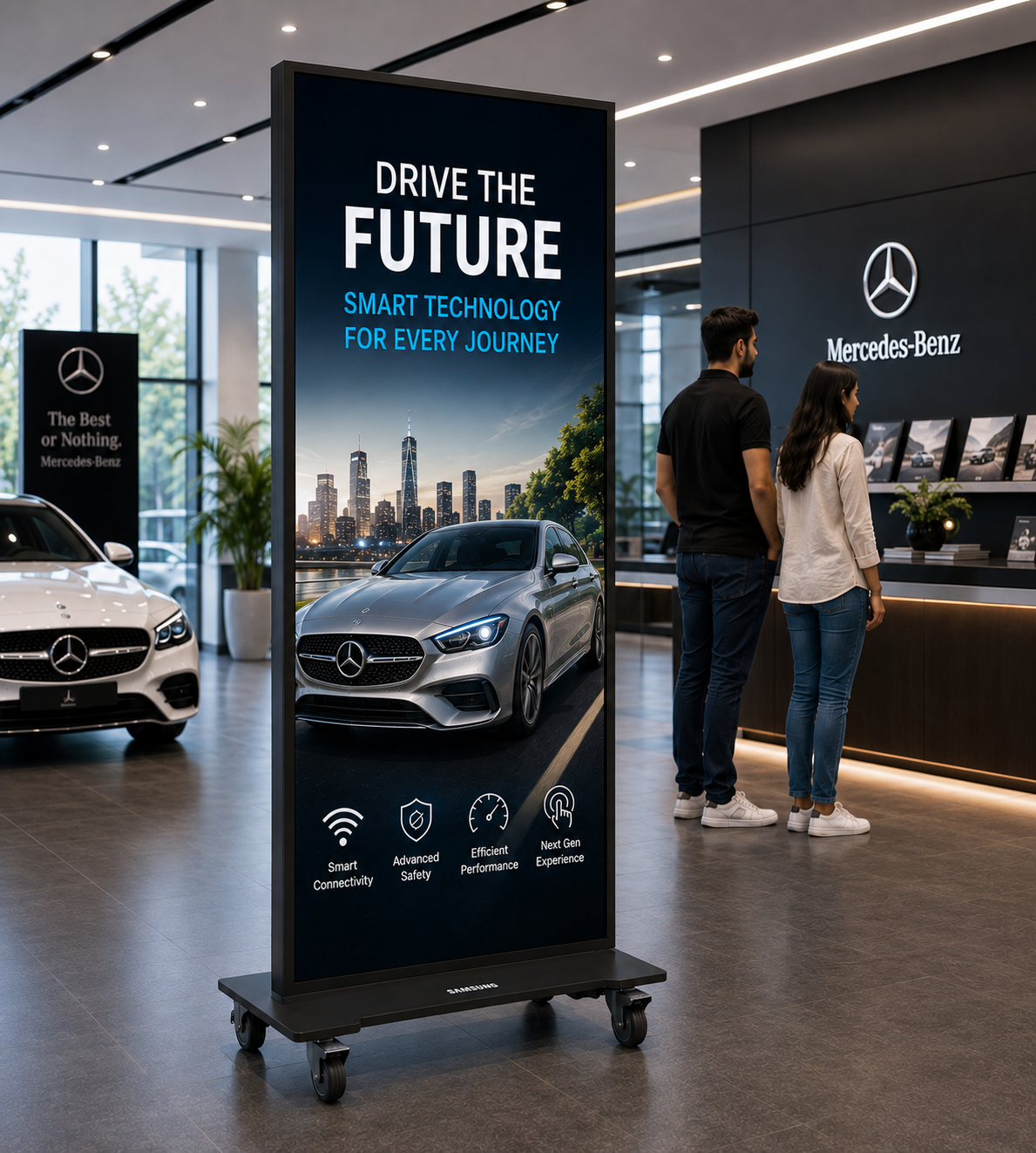
Furniture stores, automobile showrooms, jewelry stores, lifestyle stores, and other premium retail environments can use digital displays to strengthen their visual presentation.
High-quality product visuals and carefully designed motion content can help create a more modern and premium shopping environment.
A major advantage of digital signage for retail is the ability to update promotional content without replacing a physical poster.
Consider a store running three different campaigns during the same week. With printed posters, each campaign may require separate designs, printing, delivery, and installation. With a digital poster display, different creatives can be scheduled on the same screen.
This allows retailers to make their promotional communication more adaptable.
For example, a fashion retailer could display new arrivals during the morning, a special discount campaign during peak shopping hours, and a festive collection later in the day. The physical display remains the same while the digital content changes according to the campaign.
An LED poster display does not automatically guarantee better advertising. The content shown on the screen plays an important role in attracting attention and communicating the intended message.
Retail advertising content should be visually clear and easy to understand. Strong product photography, readable text, recognizable branding, simple messaging, and an appropriate call to action can make the display more effective.
Because customers may only look at the screen for a few seconds, the main message should not require lengthy reading. Short promotional headlines and strong visuals are generally easier to understand in a busy retail environment.
Retailers should also create content according to the vertical format of the LED poster. Designing specifically for the screen rather than simply stretching an existing social media creative can produce a more professional result.
Retailers should consider several factors before choosing an indoor digital poster display. Screen size, brightness, resolution, viewing distance, installation location, content requirements, operating hours, and maintenance should all be evaluated.
The display should fit naturally into the store environment without blocking customer movement or important product areas.
Businesses should also consider how frequently the content will change. A retailer running multiple campaigns may benefit more from a flexible digital display than a business that only changes promotional material occasionally.
For businesses looking for a dedicated digital poster solution, the indoor LED poster display can be evaluated according to the store’s advertising and visual communication requirements.
The shift from static posters to digital displays gives retailers more control over how promotional messages are presented. An Indoor LED Poster Display for Retail Stores can support multiple campaigns, product promotions, seasonal content, and brand communication from one physical display.
The biggest value comes from combining the right display with the right location and well-designed content. When these elements work together, digital signage can become a useful part of the overall retail marketing experience.
In the next part, we will look more closely at how retail stores can use indoor LED poster displays for different types of promotions and customer-facing campaigns, including product launches, seasonal offers, and in-store advertising.
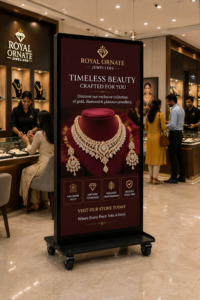
Retail advertising needs to communicate the right message at the right time. An Indoor LED Poster Display for Retail Stores gives businesses the flexibility to promote products, offers, launches, seasonal campaigns, and brand messages without relying entirely on printed promotional materials.
Because the content on a digital poster can be changed, retailers can use the same display for different campaigns throughout the year. This makes an LED Poster Display for Retail useful for both everyday communication and high-impact promotional periods.
Launching a new product is an important opportunity for retailers to attract customer attention. Instead of relying only on shelf labels or printed posters, stores can use an indoor LED poster display to introduce the product with high-quality visuals, short videos, product features, and promotional messages.
A fashion store, for example, can showcase a new collection through lifestyle visuals, while an electronics retailer can use product videos to highlight important features. The combination of movement and large-format visuals can help the new product stand out within a busy store environment.
Seasonal promotions are a major part of retail marketing. During festivals, holidays, clearance periods, and shopping seasons, stores may need to communicate several offers at the same time.
A digital poster display allows retailers to change promotional creatives as campaigns progress. The same screen can promote a festive collection, discount campaign, limited-time offer, or special shopping event without requiring a new physical poster for every promotion.
This flexibility is especially useful for retailers that regularly update their promotional calendar.
Limited-time offers can create urgency and encourage customers to take action. An LED display can highlight messages such as weekend discounts, flash sales, special bundles, or time-sensitive promotions.
Retailers can schedule different creatives according to the duration of the promotion. Once an offer ends, the content can be replaced with another campaign, helping the display remain relevant throughout the store’s operating hours.
Some products are easier to understand when customers can see them in use. An indoor digital poster can display short product demonstrations, feature explanations, tutorials, or lifestyle videos.
This can be particularly useful for electronics, appliances, beauty products, fitness equipment, home products, and other categories where visual demonstrations can support the buying decision.
Instead of depending entirely on a salesperson to explain every product feature, retailers can use digital content to provide additional information while customers browse.
Store entrances are one of the most important areas for retail advertising because they provide the first opportunity to communicate with customers. A strategically positioned LED poster can display current offers, featured products, new arrivals, and brand campaigns before customers begin browsing.
The content can also be changed according to the time of day or promotional schedule. This gives retailers more control over what customers see when they enter the store.
Retail environments are increasingly designed around the overall customer experience. Lighting, product displays, signage, interiors, and digital communication all contribute to how customers perceive a brand.
A well-designed digital display for retail stores can complement the existing store design while providing a modern platform for brand communication.
Premium product visuals, carefully designed animations, and consistent brand elements can help create a more polished presentation without requiring large-scale structural changes to the store.
One of the useful features of digital retail signage is the ability to display different content at different times. Retailers can plan their advertising around customer behavior, promotional schedules, and business priorities.
For example, a restaurant inside a shopping complex could promote breakfast-related content earlier in the day, lunch offers around midday, and dinner promotions later in the evening. A fashion retailer could highlight new arrivals during normal shopping hours and promote special offers during peak periods.
This approach allows the same physical display to support multiple marketing messages instead of being limited to one static creative.
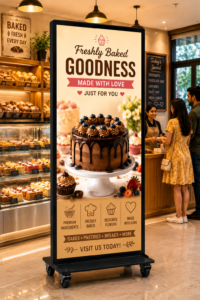
Retailers can also use digital displays to encourage customers to consider related products. A screen positioned near a particular product category can showcase complementary products, accessories, bundles, or special combinations.
For example, an electronics store could promote accessories alongside a featured device, while a fashion store could showcase footwear or accessories alongside a clothing collection.
When the content is relevant to the products surrounding the screen, digital signage can become part of the customer’s shopping journey rather than simply functioning as general advertising.
Static posters can remain unchanged for weeks or months, which may eventually reduce their visual impact. Digital content gives retailers the ability to refresh promotional messages more frequently.
Changing product visuals, offers, campaign themes, and seasonal content can help maintain a more active store environment. Retailers can plan a content calendar so that the screen always displays information relevant to current campaigns.
Retailers should design content specifically for the LED poster format. The vertical screen should be used to its full potential rather than simply displaying a resized version of an existing advertisement.
Large product images, short headlines, strong branding, concise promotional messages, and clear calls to action can help customers understand the message quickly.
Video content should also be kept focused. Long videos with slow introductions may not work as effectively in retail environments where customers are constantly moving.
An indoor LED poster display can work alongside printed signage, product displays, staff communication, websites, and social media campaigns. Consistent branding across these channels can create a more connected customer experience.
For businesses that want to understand how indoor LED poster displays work across different commercial environments, the complete indoor LED poster display guide provides additional information about applications, benefits, and selection considerations.
Retailers looking for a dedicated solution can also explore the indoor LED poster display for digital promotional and advertising applications.
Indoor LED poster displays give retailers a practical way to move beyond fixed promotional materials. From product launches and seasonal campaigns to limited-time offers and product demonstrations, one display can support multiple communication needs.
The most effective approach is to combine relevant content, strategic placement, and consistent campaign updates. When used as part of a broader retail marketing strategy, digital poster displays can help stores create a more engaging and adaptable promotional environment.
In the next part, we will explore how retailers can use indoor LED poster displays to improve customer engagement and the in-store shopping experience.
Customer engagement has become an important part of the modern retail experience. Shoppers are exposed to product information, promotions, branding, and advertisements throughout their shopping journey. An Indoor LED Poster Display for Retail Stores can help businesses make these interactions more visually engaging by presenting dynamic digital content in strategic areas.
Unlike a traditional printed poster that communicates one fixed message, a digital poster display can show changing visuals, videos, animations, product information, and promotional campaigns. This gives retailers more opportunities to communicate with customers while they browse the store.
Retail stores can contain shelves, product displays, banners, promotional signs, lighting, and other visual elements. In such environments, it can be difficult for one promotional message to stand out.
An LED Poster Display for Retail can use bright digital visuals and motion to create an additional point of attention. When positioned correctly, the display can attract customers toward a particular product area, promotion, or store section.
The goal should not be to fill the screen with excessive animation. Clear visuals, simple messaging, and well-timed content can create a stronger viewing experience.
Digital signage can be used to introduce customers to products they may not have noticed while browsing. A screen positioned near a product category can highlight featured items, new arrivals, product benefits, or special combinations.
For example, a beauty store could use an indoor digital poster to showcase a new skincare collection, while a furniture retailer could display lifestyle images showing how products can be used in different spaces.
This type of visual communication can complement physical product displays and provide customers with additional information before they speak with a salesperson.
The customer journey does not begin only when a shopper reaches the checkout counter. It starts when they enter the store and continues as they discover products, compare options, consider promotions, and make purchasing decisions.
A digital display for retail stores can support different stages of this journey. Near the entrance, it can introduce current promotions. In product areas, it can highlight features or benefits. Near checkout, it can promote related products, loyalty programs, or upcoming offers.
Using different messages in different locations can make digital signage more relevant to the customer’s immediate shopping context.
Some products require more explanation than others. Product videos can help retailers communicate features, demonstrations, installation methods, usage instructions, or lifestyle applications.
An indoor LED poster can display short videos that explain how a product works or demonstrate its key benefits. This can make the shopping environment more informative without requiring printed materials for every product.
Video content should remain concise and visually clear because customers may only watch the screen for a short period while moving through the store.
Even when a digital display is not directly interactive, dynamic content can create a more engaging visual experience than a static poster. Animated transitions, changing product visuals, short promotional videos, and moving graphics can make the screen feel more active.
Retailers can use this visual movement to guide attention toward specific messages. However, the animation should support the advertising objective rather than distract customers from the main information.
One advantage of digital signage is the ability to adapt content according to different campaigns. Retailers can prepare multiple creatives and display them according to the marketing calendar.
A fashion retailer could promote a summer collection during one campaign and switch to festive products during another. An electronics store could highlight smartphones during a product launch and later promote accessories or seasonal discounts.
This flexibility allows the same physical display to remain useful for different marketing objectives throughout the year.
Consistent visual branding can help customers recognize a business across different touchpoints. Colors, typography, logos, product photography, and campaign styles can be adapted for the LED screen while maintaining the brand’s overall identity.
When the content on the digital display matches the store’s visual identity, packaging, promotional materials, and other marketing channels, the customer experience can feel more connected.
Promotions are often one of the main reasons retailers use digital displays. Discounts, limited-time offers, seasonal campaigns, and special events can be highlighted using visually engaging content.
An Indoor LED Poster Display for Retail Stores can also allow retailers to change promotional messages when offers end. This reduces the need to keep outdated printed material in promotional areas.
For stores with frequent campaigns, this flexibility can make digital signage a practical addition to their retail communication strategy.
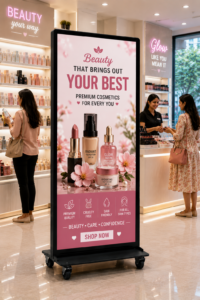
Larger retail environments may benefit from placing multiple LED poster displays in different areas. Each display can serve a specific communication purpose depending on its location.
For example, one display may be used at the entrance for brand messaging, another near a product section for product information, and another near checkout for promotional offers.
Businesses should avoid displaying identical content on every screen unless there is a specific reason to do so. Location-specific content can make each display more relevant to the customers viewing it.
Digital signage should complement the physical retail environment rather than appear disconnected from it. Screen placement, viewing height, surrounding lighting, product displays, and customer movement should all be considered during installation.
A well-positioned digital poster can become part of the store’s visual design while still providing a strong promotional communication channel.
The effectiveness of an indoor LED poster depends not only on the hardware but also on when and where the content is displayed. Retailers should understand when customers are most likely to notice specific messages and adjust their content strategy accordingly.
Promotional campaigns can be scheduled around peak shopping periods, seasonal events, product launches, or special store activities. This makes the digital display more responsive to the actual retail environment.
An LED poster display can support other retail marketing activities rather than replacing them completely. Printed materials, product packaging, social media campaigns, websites, loyalty programs, and staff recommendations can all work alongside digital signage.
For example, a retail campaign could use the LED screen to introduce a new product while the store’s social media campaign provides additional information online. Consistent messaging across these channels can create a stronger overall campaign.
Businesses that want to understand the wider applications and benefits of this technology can refer to the indoor LED poster display guide for additional information.
Retailers looking for a dedicated digital display solution can explore the LED poster display for indoor promotional and advertising applications.
Indoor digital signage gives retailers another way to communicate with customers beyond traditional posters and printed materials. By combining dynamic content, product visuals, promotional messages, and strategic placement, an Indoor LED Poster Display for Retail Stores can become part of the customer experience.
The most effective results come from using the display for a clear purpose, creating content that is easy to understand, and regularly updating campaigns according to customer needs and business objectives.
In the next part, we will look at the key features retailers should consider when choosing an indoor LED poster display, including brightness, resolution, screen size, viewing distance, content management, and placement.
Choosing the right Indoor LED Poster Display for Retail Stores requires more than looking at the screen size or overall appearance. Retail environments have different lighting conditions, viewing distances, available floor space, and content requirements. Understanding the important display features can help businesses select a solution that fits their store and advertising goals.
For retailers comparing different digital signage options, factors such as brightness, resolution, pixel pitch, screen size, viewing distance, content management, portability, and maintenance should be considered before making a decision.
Brightness influences how clearly promotional content appears on a screen. Although an indoor display does not need the same brightness level as an outdoor LED display, it should still provide clear and comfortable visuals under the store’s lighting conditions.
Retailers should consider whether the screen will be positioned near windows, under strong showroom lighting, or in a relatively darker interior area. The surrounding lighting can affect how customers perceive images, videos, and promotional text.
The right brightness level can help ensure that an LED Poster Display for Retail remains noticeable without creating an uncomfortable viewing experience.
Retail advertising often relies heavily on product images, branding, videos, and detailed visuals. Display resolution therefore plays an important role in the overall presentation.
A high-quality display can help product images, text, logos, and promotional graphics appear sharper and more professional. This can be particularly important for premium retail environments where visual presentation is closely connected to brand perception.
Businesses should consider the type of content they plan to display and the typical viewing distance when evaluating resolution.
Pixel pitch refers to the distance between individual LED pixels. The appropriate pixel pitch depends on how close customers are likely to stand when viewing the screen.
A display positioned close to customers may require a finer pixel pitch to provide detailed visuals, while a screen viewed from farther away may not require the same configuration.
Retailers should therefore determine the expected viewing distance before selecting the display rather than choosing a pixel pitch based only on the specification number.
The size of an indoor digital poster should match the available space and intended viewing distance. A larger display can create stronger visual impact, but it also requires sufficient floor or wall space and should not interfere with customer movement.
Retailers should evaluate the width of entrances, aisles, promotional areas, product sections, and checkout zones before deciding where to position the display.
A well-sized digital display for retail stores should be clearly visible while remaining naturally integrated into the store environment.
The vertical format of an LED poster display can be particularly useful for retail applications. It can occupy a relatively small footprint while providing enough screen area for promotional visuals.
The portrait orientation also works well for product photography, fashion campaigns, promotional posters, announcements, and vertically designed video content.
Retailers should create content specifically for the display’s aspect ratio instead of simply resizing horizontal advertisements. Properly designed content can make better use of the available screen area.
One of the main benefits of digital signage is the ability to change content. Retailers should consider how easily promotional content can be uploaded, scheduled, updated, and managed.
A flexible content management setup can allow businesses to display different campaigns throughout the day or change promotions according to their marketing calendar.
For example, a retailer could schedule new-arrival content during one period and promotional offers during another. This makes the same display useful for multiple campaigns rather than limiting it to one static message.
Retail stores may change their layouts frequently, especially during seasonal campaigns, product launches, and promotional events. A digital poster that can be positioned appropriately within the store can provide additional flexibility.
Businesses should consider where the display will be placed permanently or temporarily and whether its design is suitable for the intended retail environment.
Entrance areas, promotional zones, showrooms, checkout areas, and product sections can all have different placement requirements.
Customers do not always view a screen directly from the front. They may approach from an aisle, walk past the display, or view it from the side.
Retailers should therefore consider the expected viewing angles when choosing an indoor LED poster display. The display should remain visually effective for customers moving through the surrounding area.
Placement height and surrounding objects should also be considered so that shelves, product stands, or other displays do not block the screen.
Retail displays may operate for several hours every day, so businesses should consider reliability and expected operating requirements. A display intended for continuous commercial use should be suitable for the store’s operating schedule.
Retailers should also understand maintenance requirements and available technical support before purchasing an LED display. Planning for long-term operation can help reduce unexpected interruptions to promotional campaigns.
Energy consumption is another factor businesses can consider when selecting a digital display for retail applications. The screen may operate for long periods during store opening hours, so efficient operation can contribute to better ongoing cost management.
Power availability and electrical requirements should also be evaluated at the proposed installation location before deployment.
Like other commercial display technologies, an indoor LED poster display requires appropriate maintenance to maintain consistent performance. Retailers should understand cleaning requirements, technical servicing, component replacement, and support options.
A display that is easy to access and maintain can help businesses manage long-term operation more efficiently. Retailers should consider these requirements before finalizing their purchase.
The best Indoor LED Poster Display for Retail Stores is not necessarily the display with the highest specification in every category. The right solution should match the store’s physical environment, customer behavior, advertising objectives, and content strategy.
A premium fashion store may prioritize high-quality visuals and presentation, while a busy retail outlet may focus more on visibility, content flexibility, and frequent promotional updates.
Understanding these differences can help retailers avoid selecting a display based only on price or screen size.
Businesses can learn more about different applications and important selection considerations through the complete indoor LED poster display guide.
For retailers evaluating a dedicated digital poster solution, the indoor LED poster display can be considered for promotional communication and digital advertising applications.
Choosing an indoor LED poster for a retail environment involves balancing visual quality, screen size, viewing distance, content requirements, placement, reliability, and long-term operating needs.
When these factors are considered together, retailers can select a digital display that fits naturally into their store while providing a flexible platform for product promotions, advertising campaigns, and customer communication.
In the next part, we will compare indoor LED poster displays with traditional printed posters and examine the differences in content flexibility, campaign updates, visual impact, and long-term retail advertising use.
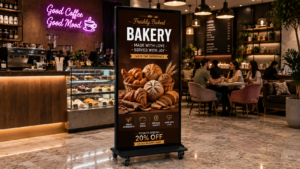
Printed posters have been a common part of retail advertising for many years. They are simple to design, print, and place around a store. However, retailers that frequently change promotions, launch new products, or run multiple campaigns may need a more flexible communication solution. An Indoor LED Poster Display for Retail Stores provides a digital alternative that allows businesses to update promotional content without replacing the physical display.
Both printed posters and digital displays can have a role in retail marketing. The better option depends on the store’s campaign frequency, content requirements, available space, budget, and long-term advertising objectives.
The biggest difference between a traditional poster and an LED poster display is the type of content they can present.
A printed poster normally communicates one fixed message. If the promotion changes, the retailer needs to create, print, and install a new poster.
An LED Poster Display for Retail can display images, videos, animations, promotional graphics, product demonstrations, and multiple campaigns on the same screen.
This gives retailers greater flexibility when their promotional messages change frequently.
Retail campaigns can change quickly. A discount may end, a new product may arrive, or a seasonal promotion may need to be launched. With printed advertising, every major content change can require a new physical creative.
Digital signage allows retailers to change the content displayed on the screen instead. This can make campaign management more convenient for stores that regularly update their promotional messages.
For example, a fashion retailer could promote a new collection one week and switch to a clearance campaign the following week without replacing the physical display.
A traditional poster generally has one creative available to customers at any given time. A digital poster display can rotate multiple creatives according to a predefined content schedule.
This means retailers can use one screen for several purposes, such as:
Using different content on the same screen can help retailers make better use of limited promotional space.
Printed posters depend on static graphics to attract customer attention. Digital displays can add movement through videos, animations, transitions, and changing visual content.
This does not mean every digital advertisement needs to contain complex animation. Simple product videos, subtle transitions, and well-designed promotional graphics can already create a more dynamic visual experience.
In busy retail environments, this additional movement can help draw attention toward specific promotional areas.
Printed posters are useful for showing product images and short written messages, but they cannot demonstrate a product through motion.
An indoor LED poster can display short product videos, demonstrations, tutorials, or lifestyle content. This can be valuable for products where customers benefit from seeing how something works.
For example, an electronics store could show a product demonstration, while a beauty retailer could display a short application tutorial or product-use video.
Retailers often run campaigns around festivals, holidays, shopping seasons, product launches, and clearance periods. These campaigns may change several times throughout the year.
With printed posters, each campaign requires a new physical creative. A digital poster display can support these changes through updated content while keeping the same physical display in place.
This can be particularly useful for stores that maintain an active promotional calendar throughout the year.
Digital signage does not necessarily eliminate printed materials from a retail store. Price tags, product information, brochures, packaging, and other physical materials may still be necessary.
However, an LED poster can reduce the need for repeatedly printing large promotional posters for campaigns that change frequently.
This can make the promotional environment more adaptable while giving retailers another channel for communicating marketing messages.
Digital displays provide another advantage through content scheduling. Retailers can prepare multiple advertisements and determine when different creatives should appear.
A store may promote a particular product during peak shopping hours, switch to another campaign later in the day, and highlight a different offer during a special event.
This level of content control is difficult to achieve with traditional printed posters because the physical creative remains unchanged until it is manually replaced.
Marketing teams often need to respond quickly to changing business priorities. A product may sell faster than expected, a promotion may be extended, or a new campaign may need to be launched.
A digital poster display gives retailers more flexibility when responding to these changes. Instead of planning every promotional message around printing and installation schedules, businesses can manage campaigns digitally.
This can be especially valuable for retail chains, shopping environments, showrooms, and stores with frequent promotional updates.
Traditional posters can be placed on walls, windows, stands, and other surfaces throughout a store. Digital poster displays require a suitable location and power connection, but their vertical format can make them practical for many retail environments.
Retailers should consider customer movement, viewing distance, surrounding products, lighting, and available floor space before installation.
A well-positioned display can communicate promotional content without interfering with aisles or important product areas.
Printed posters can still be effective for simple, low-cost, short-term, or fixed promotional communication. They are useful when the message is unlikely to change frequently.
An Indoor LED Poster Display for Retail Stores becomes more attractive when a retailer wants dynamic content, frequent campaign updates, product videos, multiple advertisements, and greater control over promotional communication.
The decision should therefore be based on how the store operates rather than assuming that one format is suitable for every business.
An LED poster display may be worth considering when a business regularly launches new products, runs seasonal promotions, changes offers, uses video advertising, or wants to modernize its in-store communication.
It can also be useful for retailers that want one physical display to support multiple marketing campaigns throughout the year.
Businesses looking for a deeper overview of indoor LED poster technology, applications, and selection factors can refer to the indoor LED poster display guide.
Retailers ready to evaluate a dedicated digital signage solution can explore the indoor LED poster display for commercial promotional applications.
The choice between printed posters and digital signage depends on campaign frequency, content type, store environment, budget, and long-term marketing goals.
For retailers that need a simple fixed message, printed posters can remain practical. For businesses that need flexible campaigns, dynamic visuals, product videos, and regularly updated promotions, an indoor LED poster display can provide a more adaptable advertising platform.
In the next part, we will look at how to choose the right indoor LED poster display for a retail business, bringing together screen size, brightness, viewing distance, content requirements, placement, maintenance, and overall investment.
Choosing the right Indoor LED Poster Display for Retail Stores requires a clear understanding of the store environment, customer movement, advertising objectives, content requirements, and available space. Instead of selecting a display based only on screen size or price, retailers should evaluate how the display will actually be used throughout the year.
A well-selected digital poster display can support product launches, seasonal promotions, brand campaigns, limited-time offers, product demonstrations, and everyday in-store communication from a single digital platform.
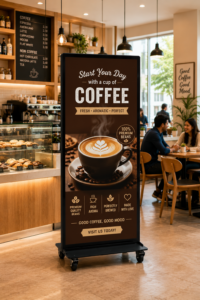
The first step is to determine what you want the display to accomplish. Some retailers may primarily need the screen for promotional offers, while others may want to showcase products, strengthen branding, or provide information to customers.
Common objectives include:
Understanding the primary objective makes it easier to determine the right display configuration and content strategy.
Location can have a major impact on the effectiveness of an LED Poster Display for Retail. The screen should be placed where customers are likely to notice and view the content without interfering with normal store movement.
Potential locations include entrances, promotional zones, product sections, checkout areas, waiting areas, showrooms, and high-traffic aisles.
Retailers should also check whether shelves, racks, pillars, or other fixtures could block the screen from certain viewing angles.
The typical distance between customers and the display should be considered when selecting screen specifications. A display positioned close to shoppers may require different visual characteristics from one viewed from across a large showroom.
Viewing distance can influence the appropriate pixel pitch, resolution, and screen size. Choosing these specifications based on the actual retail environment can help ensure that product images, text, and videos remain clear.
Screen size should be matched to the available space and expected audience distance. A larger display can create greater visual impact, but it should still fit naturally into the store layout.
Retailers should measure the proposed installation area and consider customer movement before selecting the display size. The screen should be clearly visible without making the surrounding area feel crowded.
Indoor retail environments can have significantly different lighting conditions. A display near large windows may receive natural daylight, while another positioned inside a showroom may be surrounded by artificial lighting.
Brightness should therefore be considered according to the actual location. The goal is to ensure that promotional content remains clearly visible while maintaining a comfortable viewing experience.
The content strategy should influence the type of indoor digital poster you choose. Retailers planning to display high-quality product videos, detailed product images, animated promotions, or branded campaigns should consider the display’s visual performance.
Content should also be created specifically for the screen’s vertical format. A well-designed portrait creative can use the available screen area more effectively than a horizontal advertisement that has simply been resized.
If your retail campaigns change frequently, content management becomes an important consideration. Businesses should understand how content can be uploaded, updated, scheduled, and replaced.
A flexible content management setup can allow retailers to prepare multiple creatives and organize them according to promotional schedules.
For example, a retailer could display a new collection in the morning, a promotional offer during peak shopping hours, and a different campaign later in the day.
Retail displays may operate throughout the store’s opening hours, so businesses should consider the expected daily operating schedule before selecting a display.
Retailers should also understand power requirements, operating conditions, maintenance needs, and technical support. These factors can influence the long-term reliability of the digital signage solution.
Maintenance should be considered as part of the purchasing decision. Retailers should understand how the display is serviced, how components can be replaced if required, and what type of technical support is available.
A clear maintenance plan can help businesses keep promotional screens operational and reduce unnecessary downtime.
Some retailers frequently change their store layouts for seasonal campaigns, product launches, exhibitions, and special promotions. In these cases, placement flexibility can become an important consideration.
Before purchasing, businesses should determine whether the display will remain in one permanent location or whether it may need to be repositioned for different campaigns.
The initial purchase price is only one part of the overall investment. Retailers should also consider display performance, content flexibility, operating requirements, maintenance, service support, and expected usage.
A digital poster that can support multiple campaigns over several years may provide greater practical value than repeatedly producing and replacing printed promotional materials.
The right decision should therefore be based on the retailer’s long-term communication strategy rather than simply choosing the lowest-cost option.
For retailers that frequently update promotions and want more dynamic communication, an Indoor LED Poster Display for Retail Stores can provide a flexible alternative to relying entirely on static advertising.
Product launches, seasonal campaigns, discounts, videos, brand messages, and store announcements can all be managed through the same digital display. This makes the technology suitable for a wide range of retail environments.
Retailers can learn more about applications, benefits, specifications, and selection considerations through the complete indoor LED poster display guide.
Businesses ready to evaluate a dedicated solution can explore the indoor LED poster display for retail advertising and digital promotional applications.
The right indoor LED poster display should match the store’s physical environment, customer behavior, advertising objectives, and content strategy. Screen size, brightness, viewing distance, visual quality, content management, placement, operating requirements, and maintenance should all be considered together.
When these factors are evaluated carefully, retailers can choose a digital display that fits naturally into the store and supports marketing campaigns throughout the year.
An indoor LED poster is not simply a replacement for a printed poster. It can become a flexible digital communication platform that evolves with the retailer’s products, promotions, seasons, and customer engagement strategy.
For businesses planning to move from static retail advertising toward more dynamic digital communication, selecting the right display based on actual store requirements is the most important first step.